
With the popularity of e-cigarettes, the use of e-cigarette oil is also rising. However, many e-cigarette users lack understanding of how to scientifically recycle and dispose of waste e-cigarette oil, which may lead to environmental pollution problems. This article will introduce you to the recycling method of e-cigarette oil, hoping to help you to reduce waste and support environmental protection.
I.The necessity of recycling e-cigarette oil
E-liquids is mainly composed of nicotine, propylene glycol and vegetable glycerin, and other components, if these components are directly discharged, it may cause pollution to soil and water, especially the waste e-cigarette oil containing nicotine, and improper treatment will pose a threat to the environment and human health. Scientific recycling of e-cigarette oil not only helps to protect the environment, but also effectively reduces resource waste.
II.The recovery method of e-cigarette oil
1.Collect waste e-vape
Before recycling, the e-cigarette oil that is no longer used should first be collected. Special small containers can be used to store waste e-vape to prevent leakage or volatilization.
2.Look for specialized recycling points
Many areas have hazardous waste recycling stations, and you can check with your local environmental protection department to find out if there is a site dedicated to recycling e-vape to ensure that it is safely disposed of.
3.Contact the e-cigarette brand
Some e-cigarette brands offer e-liquid recycling services, especially the larger brands. You can check their official website or customer service to see if there is a vape recycling policy or mail recycling option.
4.Avoid random disposal
Do not throw items containing e-vape directly into ordinary trash cans, especially if they contain a lot of nicotine. Nicotine is a toxic substance, and its direct discharge will have a great impact on the environment.
III.Recycling and reuse of e-cigarette oil bottles
1.Clean the bottle
After use, the e-cigarette oil bottle can be recycled, but it needs to be thoroughly cleaned. It is recommended to clean the bottle with warm water and a neutral cleaner to ensure that there are no residual substances.
2.Sorting and recycling
Vape bottles are generally made of plastic or glass. Please sort the cleaned bottles by material and place them in the corresponding plastic or glass recycling bins to ensure that the waste is properly disposed of.
3.Secondary utilization
If you are keen on DIY, you can try to reuse the cleaned vape bottle, for example, to store homemade vape or other liquids. During this process, it is important to pay attention to hygiene and safety.
IV.An environmentally friendly alternative to e-liquids
In order to more effectively reduce environmental pollution, it is recommended to choose some environmentally friendly e-liquids, such as low-nicotine or no-nicotine e-liquids. These products have less impact on the environment and are more in line with the concept of sustainable development.
V.Finally
The recycling of e-liquids is crucial to environmental protection. Through the right recycling and disposal methods, we can reduce the harm of e-cigarette oil to the ecological environment. It is hoped that every e-cigarette user can realize the importance of waste e-cigarette oil recycling and contribute to the protection of the earth.
Regular attention to the environmental policy of e-cigarette products and the latest recycling information will also help you deal with the waste of e-cigarette oil more scientifically.
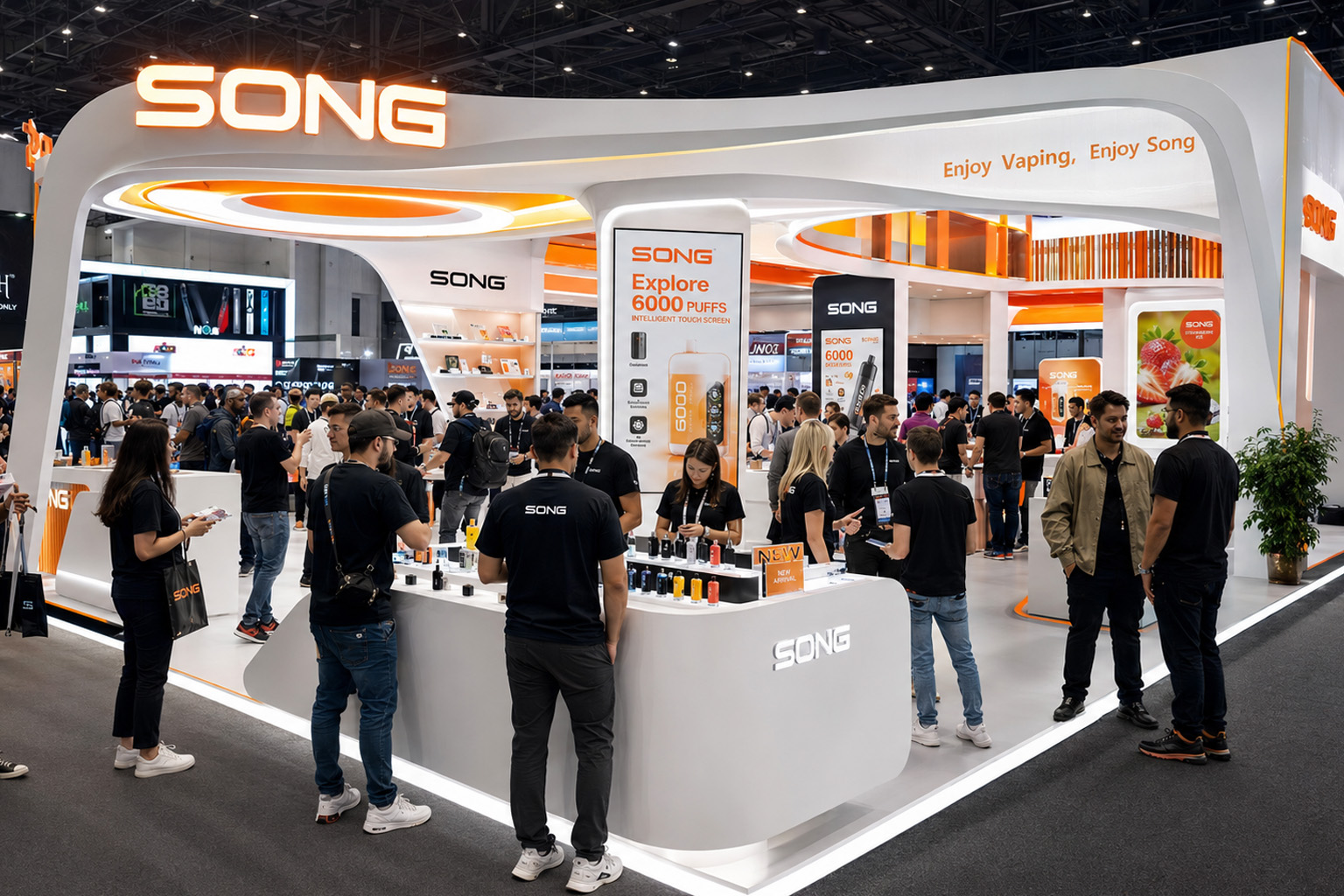
On August 3rd, the 2023 IECIE Jakarta E-Cigarette Exhibition opened successfully at the local international exhibition center (JIExpo) and will run for three days. Over 100 e-cigarette brands from around the world gathered for this event. As a well-known Chinese e-cigarette brand, SONG VAPE was invited to participate in this international e-cigarette summit.
Indonesia is a major tobacco-consuming country, with over 60 million smokers among its 270 million population. Indonesia’s e-cigarette policies are relatively open, with flavored e-liquids being popular. E-cigarette products are allowed to be advertised in media, and there are no restrictions on offline retail of e-cigarettes, indicating a vast market potential.
SONG VAPE is one of the few domestic e-cigarette companies that has obtained the ‘Tobacco Monopoly Production Enterprise License’. It possesses independent technology R&D laboratories and automated production workshops. It has deep collaborations with several internationally renowned nicotine e-liquid enterprises, employs professional perfumers for flavor development, offering more diverse and palatable tastes. SONG VAPE supports customer customization, ensures high product quality and safety, and adjusts its products according to regional characteristics. It has already secured a notable share of the Indonesian e-cigarette market through local distributors.
Located in Hall B3, SONG VAPE’s booth features a pink-gold color scheme, exuding luxury with a soft touch. Its rounded lines highlight the brand’s philosophy of diversity and compatibility. SONG VAPE e-cigarettes have won the favor of many visitors with their sleek and sophisticated appearance, smooth vaporization experience, and vibrant flavors. Products such as Y815, Y808, B01, B26, 6013, and VK02, known for their high cost-performance ratio and trendy design, attracted numerous local Indonesian distributors to place orders on-site.
Leveraging its full industrial chain, independent R&D capabilities, and rich ‘Belt and Road’ channels, SONG VAPE has successfully entered and captured e-cigarette markets in Dubai, Colombia, and Belarus in recent years. This trip to Jakarta, Indonesia, not only brought SONG VAPE a full order book but also injected a strong boost for its continued overseas expansion.
Hey everyone! Today, let’s talk about e-liquid. Whether you’re a complete beginner or a seasoned user who’s already got the hang of it, this information might just come in handy!
1. Why do e-cigarettes produce a cotton-like and burnt smell:
After an e-cigarette refilling device has been oiled, if you start vaping immediately after refilling, you may notice a cotton-like or burnt smell; this is not necessarily a problem with the e-liquid. After refilling, consumers should wait 3–5 minutes to allow the e-liquid to fully wet the oil-wicking cotton inside the atomizer; once this happens, the odor usually disappears. However, because refilled pods have a limited lifespan, after 4–5 repeated refills, the atomizer may develop an unpleasant odor; this can be caused by the oil-wicking cotton turning yellow or by carbon buildup on the heating element, so it is advisable to replace the pod with a new one. Under normal conditions, vaping 10–15 ml after a standard refilling should be fine; however, some e-liquids from overseas or domestic markets may not be compatible with the specific pod you are using, which can also cause the vapor to develop an off-flavor during use.
2. Why does vaping cause dry mouth?
That’s perfectly normal! The glycerin (VG) and propylene glycol (PG) in e-liquid are both “major water absorbers”; they draw moisture out of the mouth, making you feel parched. But don’t worry—drinking more water will ease the sensation. Additionally, if the amount of e-liquid drawn into the atomizer core with each inhalation is slightly less than the amount of e-liquid evaporated per puff, you may also feel a bit dry. You can widen the e-liquid inlet in the atomizer core or switch to a thinner oil-wicking cotton to make it more moist; you can also fine-tune the e-liquid. The porosity of the oil-wicking cotton and the molecular structure of the e-liquid also affect capillary action and oil-wicking performance.
3. What is “awakening oil”? Why is it necessary?
E-liquid is not simply a liquid; it consists of a complex mixture of chemical substances composed of various polymers, containing both oil-based and water-based components. Although these components have similar densities, they can still separate, much like water and oil. When e-liquid is freshly blended at a production facility, the goal is to allow these components to fully integrate and reach equilibrium. It is similar to a perfume you have just purchased: after being left for a while, its scent becomes softer and more balanced.
4. Is it difficult to make your own vape oil?
In fact, making your own vaping oil is not difficult: simply select suitable ingredients—such as PG, VG, flavorings, sweeteners, and cooling agents—and mix them according to a formula. The key, however, is choosing the right raw materials; try to source them from suppliers with proper certification and avoid purchasing low-quality products just to save money, since these substances are inhaled into the lungs. Individual DIY users generally cannot achieve this level of quality, and in China, vaping oil ingredients are subject to specialized regulatory oversight channels.
5. Why should the e-liquid filling equipment be shaken before use?
Since e-cigarette e-liquid contains multiple ingredients, there is a concern that the e-liquid may separate or that its viscosity at the top and bottom may change, resulting in incomplete mixing of the components; therefore, it is scientifically sound to shake the e-liquid before filling it.
6. What should I do if the e-liquid is too sweet and overly rich?
If you find the e-liquid too sweet or cloying, you can let it fully develop; if the sweetness is excessive, you may have added too much sweetener and flavoring. You can purchase e-liquid from another vendor or mix in some PG and VG yourself to dilute the flavor; if you are adjusting the e-liquid yourself, you can have a flavor specialist optimize the blend.
7. What is the sensation of throat striking?
It’s like taking a puff of a cigarette: your throat feels slightly irritated; the throat hit from an e-cigarette is similar, though much milder. The higher the nicotine concentration, the stronger the throat hit, but the greater the irritation as well. Products designed for lung inhalation have lower nicotine concentrations—typically 3–6 mg/ml—while those for oral inhalation have higher concentrations; in Europe, they generally do not exceed 10–20 mg/ml, whereas in the United States they range from 15–50 mg/ml. Generally, the better the device’s delivery power, the lower its nicotine concentration; conversely, the weaker the device’s delivery power, the higher the nicotine concentration can be appropriately increased.
8. Why do I feel dizzy after using an electronic cigarette?
Don’t panic—this may simply be because you have low tolerance to nicotine. Long-term smokers may have better tolerance, whereas people who do not smoke frequently tend to have lower tolerance. Try switching to a low-nicotine or nicotine-free e-liquid; if you still feel dizzy, stop smoking altogether—your health comes first—or limit the number of puffs you take.
9. Is it better to store e-liquid for a longer period?
Not necessarily! Some bottled e-liquids can lose their flavor if left for too long, so it’s best to use them up as soon as possible after opening. Disposable e-cigarettes contain an oil reservoir; for optimal storage, keep them for 1–6 months. If left for too long, the e-liquid will darken in color and its flavor will diminish.
10. Why does the taste of e-liquid vary when used on different atomizers?
Different atomization devices vary in output power, atomization cores, airways, airflow resistance, sealing performance, mouthpiece design, and oil wick; therefore, the same e-liquid will produce a different vaping experience when used on different devices. For e-cigarette manufacturers, it is advisable to procure e-liquids from specialized suppliers tailored to their specific devices, ensuring that the product delivers the desired vaping experience.
11. Should the e-liquid reservoir be cleaned when replacing the e-liquid?
If you want to change the flavor of your POD open carttridge, you can soak it in a PG/VG 5:5 mixture, drain the excess oil to prevent flavor carryover, and then switch to your preferred e-liquid; the first few puffs may feel less smooth, but they will improve afterward. Alternatively, you can drain the excess oil from the previous flavor e-liquid and top it off with a new flavor; the first few puffs may still carry over some flavor, so it’s better to take a few more puffs before the improvement becomes noticeable. If you do not want any flavor carryover, simply replace the carttridge and refill it with a new e-liquid.
12. What material is used for the e-cigarette e-liquid reservoir, and is it environmentally friendly?
E-cigarette e-liquid reservoirs are typically manufactured from medical-grade food-grade PCTG or PETG raw materials; these materials are also used in plastic teacups, baby bottles, and similar products. If the reservoir material is not environmentally friendly, it may undergo a chemical reaction with the e-liquid, leading to cracking or posing health risks. Consumers should therefore be wary of e-cigarettes produced by small-scale workshops, which may use recycled materials, off-brand materials, or non-medical-grade raw materials.
13. How many types of nicotine are there, and what are the differences between them?
Traditional cigarettes contain natural nicotine, whereas e-cigarettes generally contain synthetic nicotine; some e-cigarettes contain no nicotine but still produce a throat hit, which may be due to the addition of other substances.
14. What are smokeless e-cigarettes?
A certain brand claims that its light-puff mode delivers a rich, full-bodied flavor, while its deep-puff mode features a completely smoke-free design, catering to the needs of different settings. This is a matter of formulation by e-liquid manufacturers, not some high-tech breakthrough; it has existed for several years and was primarily intended to address the issue of e-cigarette bans in public places. The fact that lung-puff e-liquids contain no smoke does not mean that they are healthier than e-liquids that produce smoke.
15. Differences between domestic and international e-liquids
Vape oils produced abroad include natural, plant-extracted varieties, as well as synthetic options; most domestic vape oils are synthetic, and some domestic companies have also hired relevant researchers to extract plant-based aromas and actively pursue related patents.
16. What exactly is the “Shangtou” e-cigarette?
“Top-tier e-cigarettes” primarily contain synthetic cannabinoids, etomidate, and other illegal and harmful substances in their e-liquids. These substances are highly addictive and hazardous, and may cause serious health problems or even pose a life-threatening risk. Therefore, the public—particularly adolescents—is strongly advised to stay away from such products to avoid crossing legal red lines and endangering their own health. The state severely cracks down on and explicitly prohibits these products, which are mostly produced by small unregulated workshops; if you discover any such e-cigarettes, please report them immediately.
In short, the world of e-cigarette liquids is truly diverse and richly varied, yet it also contains some basic knowledge that is often overlooked. We hope this information will be helpful and make your e-cigarette experience even better!